
Check for leaks with a mechanical water meter
If you suspect you have a leak, how do you find it?
Finding and fixing leaks early saves bucket loads of water. We recommend you regularly check your property for leaks or if you have a digital meter, providing up-to-date contact details to receive leak alerts. Leaks aren’t always easy to see, and a continuous flow of water may not always be a leak.
How to check for leaks with a mechanical meter
Prep time:
30 mins
Testing time:
2 – 4 hours
Required equipment:
Toilet paper or food dye, notepad or camera phone
Method
We recommend checking for leaks regularly, as an average of one in ten properties has a leak that owners may not be aware of. Even slow leaks can add a significant cost to customer bills and impact the overall efficiency of the water network.
- Stop using any water
Turn off all taps and appliances that use water (dishwasher, washing machine, evaporative coolers, hot water units, irrigation systems etc.) except the stop tap next to any toilets. - Prepare your toilet
Make sure the back of the toilet pan is dry (best to wait 30 minutes after the last flush). Then place a piece of toilet paper at the back of the toilet bowl. Alternatively, you can put 6–8 drops of food dye into your toilet’s cistern and wait five minutes. Do not flush the toilet. - Find the water meter
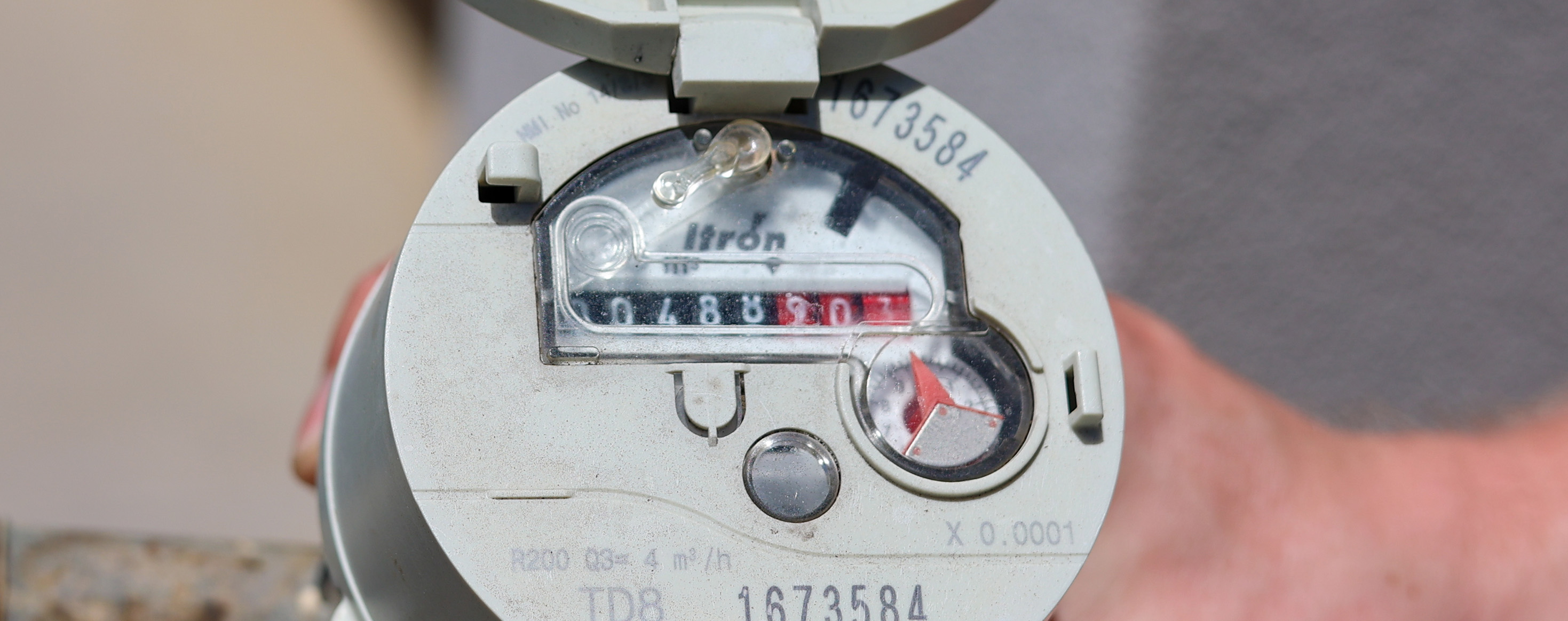
If you live in a house, the meter will be located outside and usually near the front gate or fence. For units and apartments, the meter may be near your front door or in a service cupboard. We recommend contacting your building management or your owners corporation if you need help locating a unit or apartment meter. - Check the meter reading
Once you’ve found the meter, ensure that the stop tap on the water meter is turned on. Make a note of the numbers and their position or take a photo of the reading. For more information visit How to read a water meter - Wait for 2 hours
As many leaks are slow or small, it can take up to two hours for changes to be noticeable. Make sure no one uses any water during that time. - Check the toilet bowl
If the toilet paper you placed is wet or torn, or you can see colouring appear on the back of the bowl, you may have a leak. Check the meter for confirmation. - Check the meter reading again
Make a note of the numbers and their position and compare to your original notes. On average leaks are responsible for the loss of 15L/hour. However, if the leak is small or slow the difference may not be easy to spot. - If you notice a change repeat from step 2
If you notice a change in the meter reading, we recommend repeat the test to ensure that you are confident of the presence of a leak before hiring a licensed plumber. For more information visit How to read a water meter
How to check for leaks with a digital meter
Prep time:
1 min
Testing time:
30 sec – 1 min
Required equipment:
None
Method
If you have a digital meter visit Check for leaks – Digital meter
What to do if you find a leak
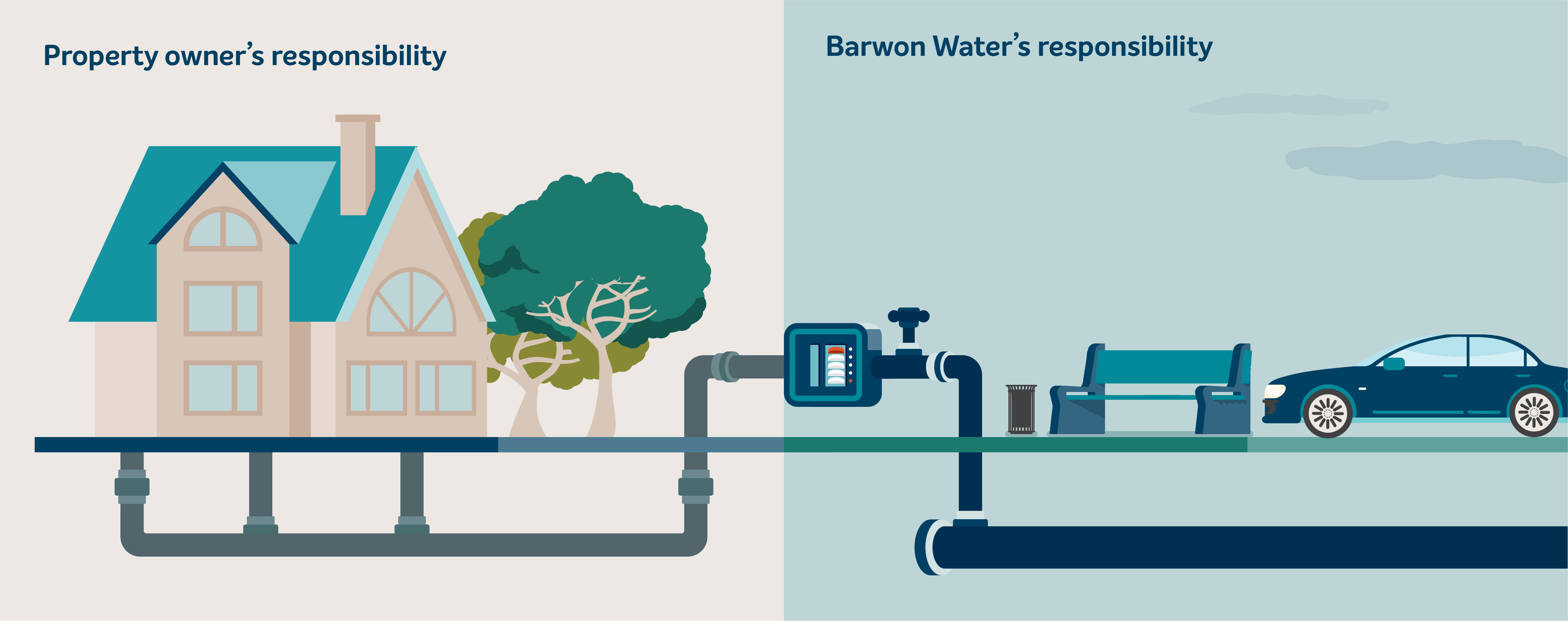
The responsibility to fix a leak depends on where the leak is located. If the leak is on the meter itself or the network side of the meter, it is Barwon Water’s responsibility to repair it. If it is on the customer’s side of the meter, it is the property owner’s responsibility to repair the leak.
Property owner's responsibility
The property owner is responsible for maintaining and repairing all pipes from the water meter to the customer's house and within the bounds of the property, including garden taps.
Barwon Water's responsibilities
For meters in unit blocks or apartments, Barwon Water is only responsible for the physical meter and does not maintain the pipes or stop taps within the complex.
To report emergencies and faults, such as burst mains or leaks call 1300 656 007 or Get in touch
Barwon Water is responsible for the water meter and the pipes leading away from the property. Any change to these pipes including new connections, disconnections and alterations must be authorised through Property connections
Unexplained high usage guidelines
Barwon Water is a contributing member to the Guideline for Unexplained High Usage and Undetected Leak Enquiries (PDF 2.1 MB).
The guideline provides an industry standard for resolving enquiries from customers who receive an unexpectedly large water bill due to a leak at their property or due to unexplained high usage.
For more information on payment assistance visit Concessions and Payment Assistance